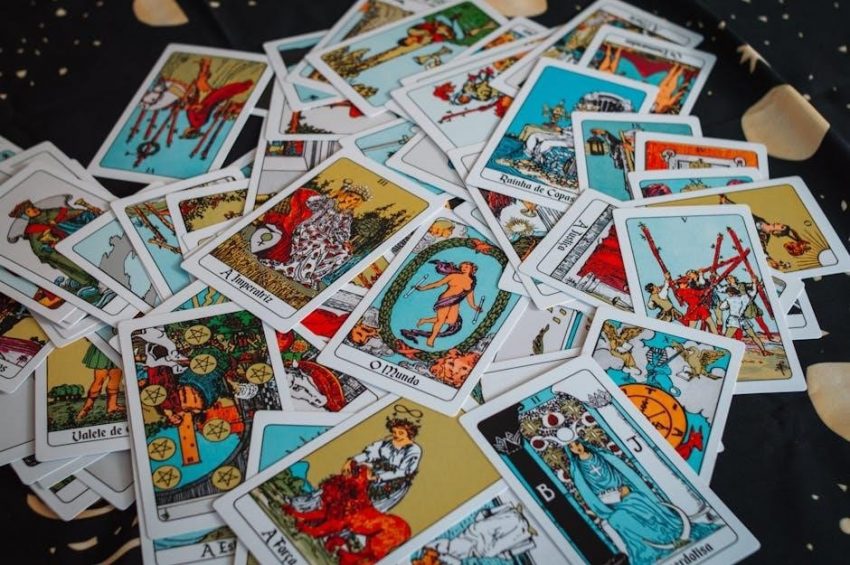
Tarot offers a pathway to self-discovery and insight, utilizing a deck of 78 cards steeped in symbolism.
Numerous guidebooks, like Avalon Cameron’s Holistic Tarot, serve as excellent references for beginners and experienced readers alike.
Exploring resources such as The Complete Book of Tarot by Juliet Sharman-Burke, or Learning the Tarot by Joan Bunning, will deepen your understanding.
What is Tarot?
Tarot is a system of divination and self-exploration employing a deck of 78 archetypal cards. These cards, richly symbolic, aren’t merely tools for predicting the future, but rather mirrors reflecting inner landscapes and potential pathways.
Understanding Tarot involves recognizing that each card represents universal themes, energies, and life lessons. Resources like Holistic Tarot by Avalon Cameron emphasize its depth as a reference, offering keywords and explanations beyond basic interpretations.
The cards are divided into the Major and Minor Arcana, each with distinct characteristics. Beginner’s guides, such as The Complete Book of Tarot by Juliet Sharman-Burke, provide step-by-step instructions for reading the cards and understanding their nuances.
Ultimately, Tarot is a language of symbols, inviting intuitive connection and personal insight. It’s a journey of self-discovery facilitated by the cards and deepened through dedicated study and practice, with resources like Learning the Tarot by Joan Bunning aiding in this process.
History of Tarot
The origins of Tarot trace back to 15th-century Italy, initially as a card game called tarocchi. These early decks differed from modern Tarot, lacking the esoteric interpretations that would develop later.
The association of Tarot with occultism began in the 18th century, with French occultists linking the cards to ancient Egyptian wisdom and Kabbalah. This sparked a surge in symbolic interpretations and divinatory practices.
The 19th century saw the rise of influential Tarot systems, like the Rider-Waite-Smith deck, which became the standard for many modern readers. Resources like The Ultimate Guide to Tarot by Liz Dean explore these historical developments and their impact on contemporary practice.

Throughout its evolution, Tarot has remained a dynamic system, adapting to cultural shifts and individual interpretations. Studying its history, aided by books like Holistic Tarot, provides context for understanding the cards’ enduring appeal and symbolic richness.
The Structure of the Tarot Deck
A standard Tarot deck consists of 78 cards, divided into two main sections: the Major Arcana and the Minor Arcana. The Major Arcana comprises 22 cards, each representing a significant life lesson, karmic influence, or archetypal theme.
The Minor Arcana contains 56 cards, further divided into four suits – Wands, Cups, Swords, and Pentacles – mirroring the elements of Fire, Water, Air, and Earth respectively. Each suit has numbered cards (Ace through Ten) and four court cards: Page, Knight, Queen, and King.
Understanding this structure is crucial for interpreting readings. Books like The Complete Book of Tarot by Juliet Sharman-Burke detail the symbolism within each suit and card.
Learning the Tarot by Joan Bunning emphasizes how the interplay between the Major and Minor Arcana reveals a comprehensive narrative. Resources such as Holistic Tarot provide detailed breakdowns of each card’s meaning within the deck’s overall framework.
The Major Arcana
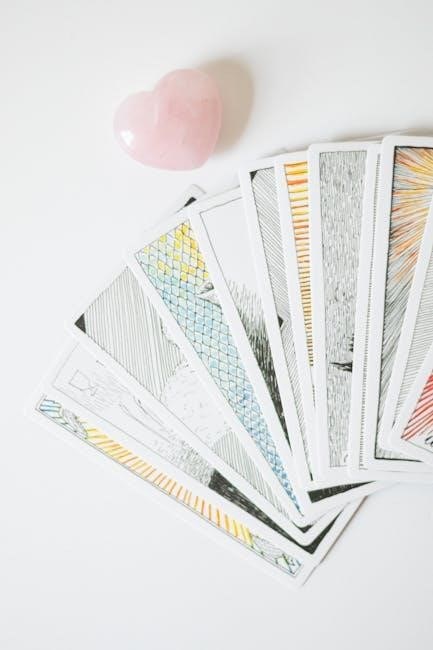
The Major Arcana’s 22 cards represent life’s significant lessons and archetypes. Holistic Tarot by Avalon Cameron provides in-depth explorations of these powerful symbols and their meanings.
Understanding the Major Arcana Archetypes
The Major Arcana isn’t simply about predicting the future; it’s a journey through universal archetypes reflecting fundamental human experiences. Each card embodies a specific stage of the soul’s evolution, offering profound insights into our personal growth and challenges.
Resources like Holistic Tarot by Avalon Cameron excel at unpacking these archetypes, moving beyond rote memorization of keywords to a deeper understanding of the underlying energies. This guidebook emphasizes recognizing the symbolic language and connecting with the cards on an intuitive level.
Understanding the archetypes allows you to see the Major Arcana as a map of the self, revealing patterns and potential pathways. For example, The Magician represents manifestation and skill, while The High Priestess embodies intuition and hidden knowledge. Exploring these archetypes through dedicated study, aided by comprehensive guides, unlocks the true power of the Tarot.
Furthermore, recognizing these archetypes within yourself and others fosters empathy and self-awareness, enriching your readings and personal development.
Key Cards and Their Meanings: The Fool
The Fool, card number zero in the Major Arcana, represents new beginnings, innocence, and limitless potential. Often depicted embarking on a journey, he symbolizes faith in the unknown and a willingness to embrace life’s adventures without preconceived notions.
Guidebooks like Holistic Tarot by Avalon Cameron delve into the multifaceted symbolism of The Fool, explaining how his carefree spirit can also indicate naiveté or recklessness. It’s a card of trust, urging you to leap forward even when the path isn’t clear.
Interpreting The Fool requires considering the surrounding cards; he can signify a literal journey, a new project, or a shift in perspective. The Complete Book of Tarot by Juliet Sharman-Burke provides context for these interpretations, highlighting the card’s connection to spontaneity and divine timing.
Ultimately, The Fool encourages us to embrace the present moment and trust the unfolding of our life’s journey, reminding us that every ending is a new beginning.
Key Cards and Their Meanings: The Magician
The Magician, the first card of the Major Arcana, embodies power, skill, and resourcefulness. He stands before a table displaying the four suits of the Minor Arcana, representing his mastery over the elements and his ability to manifest his will into reality.
According to resources like Holistic Tarot by Avalon Cameron, The Magician signifies taking action and utilizing your talents to achieve your goals. He encourages self-empowerment and reminds you that you possess all the tools necessary for success.
The Complete Book of Tarot by Juliet Sharman-Burke elaborates on the symbolism, noting the Magician’s connection to communication, concentration, and willpower. He’s a catalyst for change, urging you to harness your potential and create the life you desire.
When The Magician appears in a reading, it’s a sign to trust your abilities and confidently pursue your ambitions. He’s a reminder that you are capable of achieving anything you set your mind to.
The Minor Arcana
The Minor Arcana reflects daily life, emotions, and practical matters. Guidebooks like Learning the Tarot by Joan Bunning detail the four suits – Wands, Cups, Swords, and Pentacles – and their unique energies.
Suits of the Minor Arcana: Wands
Wands represent passion, creativity, inspiration, and willpower – the fiery energy of initiation and action. Often associated with the element of Fire, this suit embodies our drive, ambition, and spiritual purpose. Holistic Tarot by Avalon Cameron provides detailed interpretations of each Wand card, exploring their connection to personal power and manifestation.
Understanding the Wands requires recognizing their dynamic nature. From the assertive energy of the Ace of Wands to the completion signified by the Ten of Wands, each card narrates a stage in a creative or energetic process. Resources like The Complete Book of Tarot by Juliet Sharman-Burke offer guidance on deciphering the nuances of this suit.
The Wands often indicate new beginnings, courage, and the pursuit of goals. However, they can also signal impulsiveness or burnout if unchecked. Learning the Tarot by Joan Bunning emphasizes the importance of balancing the fiery energy of Wands with grounded practicality.
Suits of the Minor Arcana: Cups
Cups embody the element of Water, representing emotions, relationships, intuition, and the subconscious. This suit delves into our inner world, exploring feelings of love, joy, sorrow, and spiritual connection. Holistic Tarot, by Avalon Cameron, offers comprehensive insights into the emotional landscape depicted by the Cups, aiding in self-awareness and understanding.
The journey through the Cups often mirrors the ebb and flow of emotional experiences. From the initial blossoming of the Ace of Cups to the harmonious fulfillment of the Ten of Cups, each card illustrates a different facet of our emotional lives. The Complete Book of Tarot, authored by Juliet Sharman-Burke, provides detailed interpretations to navigate these complexities.
Cups can signify deep connection, empathy, and psychic abilities, but also potential for emotional turmoil or stagnation. Learning the Tarot by Joan Bunning stresses the importance of recognizing and processing emotions for personal growth.
Suits of the Minor Arcana: Swords
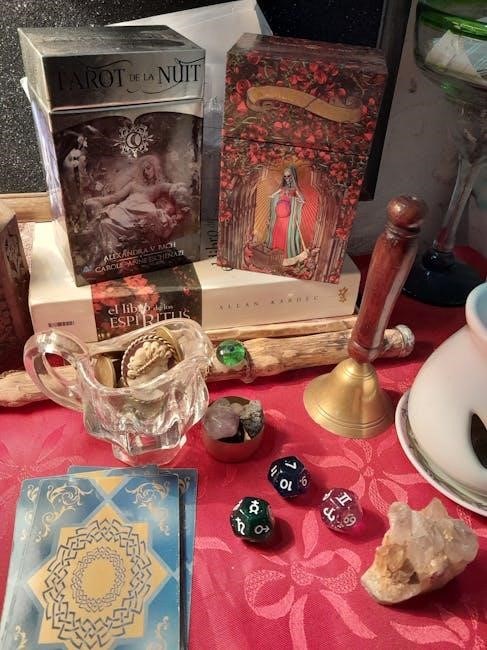
Swords represent the element of Air, embodying intellect, logic, truth, and conflict. This suit often signifies challenges, difficult decisions, and the power of the mind. Resources like Avalon Cameron’s Holistic Tarot provide nuanced interpretations of the Swords, helping to decipher complex situations and mental blocks.
The Swords’ journey often involves facing harsh realities and overcoming obstacles. From the initial clarity of the Ace of Swords to the painful revelations of the Ten of Swords, each card illustrates a different aspect of mental and emotional struggle. Juliet Sharman-Burke’s The Complete Book of Tarot offers guidance in navigating these challenging energies.
Swords can indicate breakthroughs, clarity, and the courage to confront difficult truths, but also potential for anxiety, conflict, and mental exhaustion. Learning the Tarot by Joan Bunning emphasizes the importance of discernment and mental fortitude when interpreting this suit.
Suits of the Minor Arcana: Pentacles
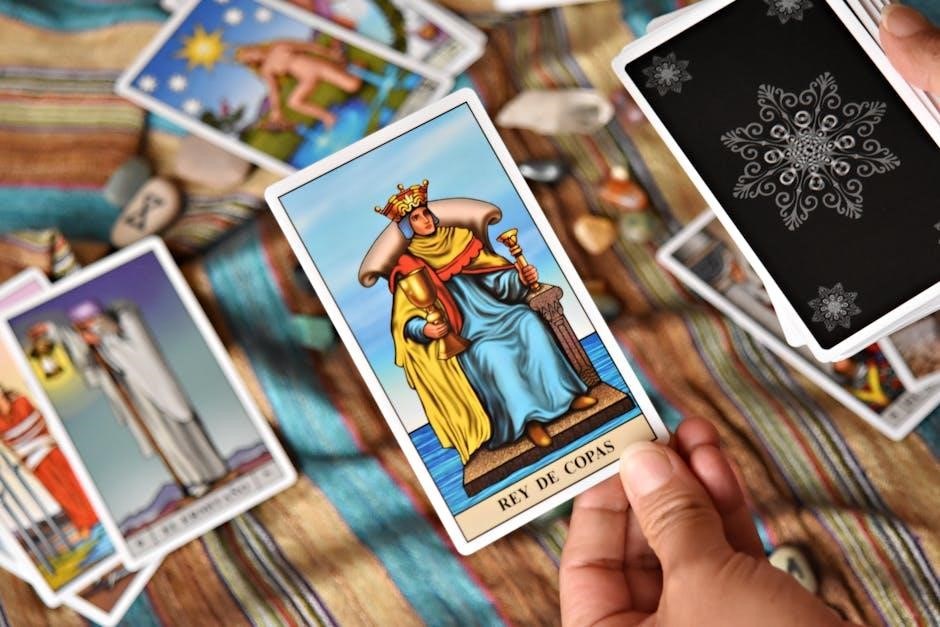
Pentacles, also known as Coins or Disks, symbolize the element of Earth, representing the material world, practicality, security, and manifestation; This suit focuses on tangible results, finances, career, and physical well-being. Holistic Tarot by Avalon Cameron offers detailed insights into understanding the grounded energy of the Pentacles and their connection to everyday life.
The Pentacles’ progression illustrates a journey from initial opportunity (Ace of Pentacles) to long-term stability and abundance (Ten of Pentacles). These cards often signify hard work, dedication, and the rewards that come from consistent effort. The Complete Book of Tarot by Juliet Sharman-Burke provides a step-by-step guide to interpreting the practical implications of each Pentacle card.
Interpreting Pentacles requires attention to detail and an understanding of material concerns. Learning the Tarot by Joan Bunning highlights the importance of recognizing both the opportunities and challenges related to finances and career.

Tarot Spreads
Tarot spreads are arrangements of cards designed to answer specific questions or provide insight into a situation. Guidebooks like The Ultimate Guide to Tarot detail various layouts, from simple three-card spreads to the complex Celtic Cross.
Simple Three-Card Spread
The Simple Three-Card Spread is a foundational layout, perfect for beginners seeking quick, focused insights. Many tarot guide books, including those by Avalon Cameron and Juliet Sharman-Burke, dedicate sections to this versatile spread. It’s easily adaptable to various inquiries, making it a valuable tool for daily practice.
Typically, the first card represents the past – influences and events that have led to the present situation. The second card illuminates the present – the current energies and challenges at play. Finally, the third card suggests the future – potential outcomes and paths forward, based on the current trajectory.
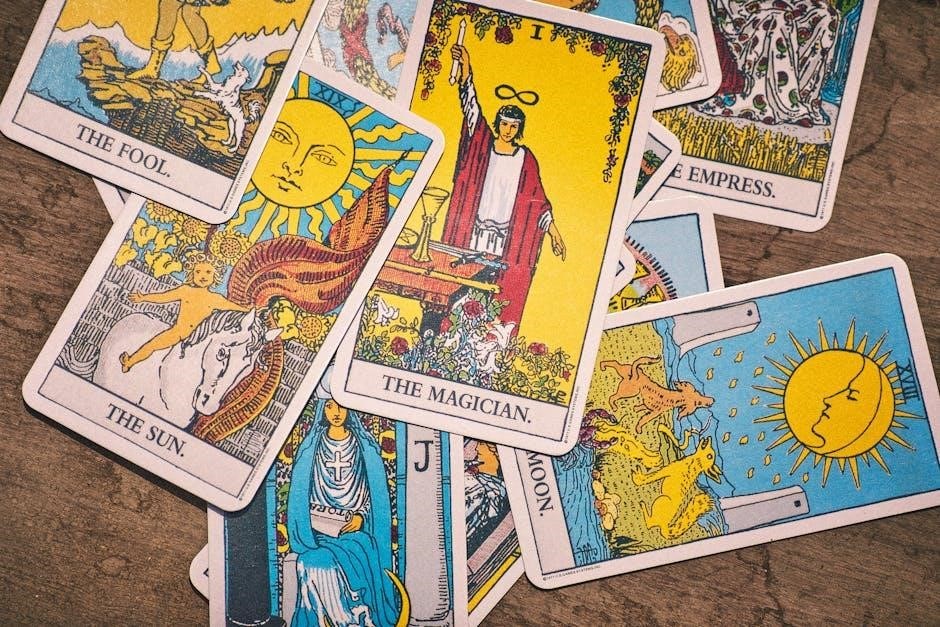
When interpreting, consider the relationships between the cards. Does the past influence the present? How does the present shape the potential future? Learning the Tarot by Joan Bunning emphasizes the importance of intuitive connections alongside traditional card meanings. This spread offers a concise yet powerful snapshot of a situation, ideal for building confidence and honing your reading skills.
Celtic Cross Spread
The Celtic Cross Spread is a comprehensive layout, considered a cornerstone of Tarot reading, detailed in numerous tarot guide books like those by Liz Dean and Juliet Sharman-Burke. It provides a multi-layered analysis of a situation, exploring its complexities and underlying influences. This spread requires more experience than simpler layouts, but offers profound insights.
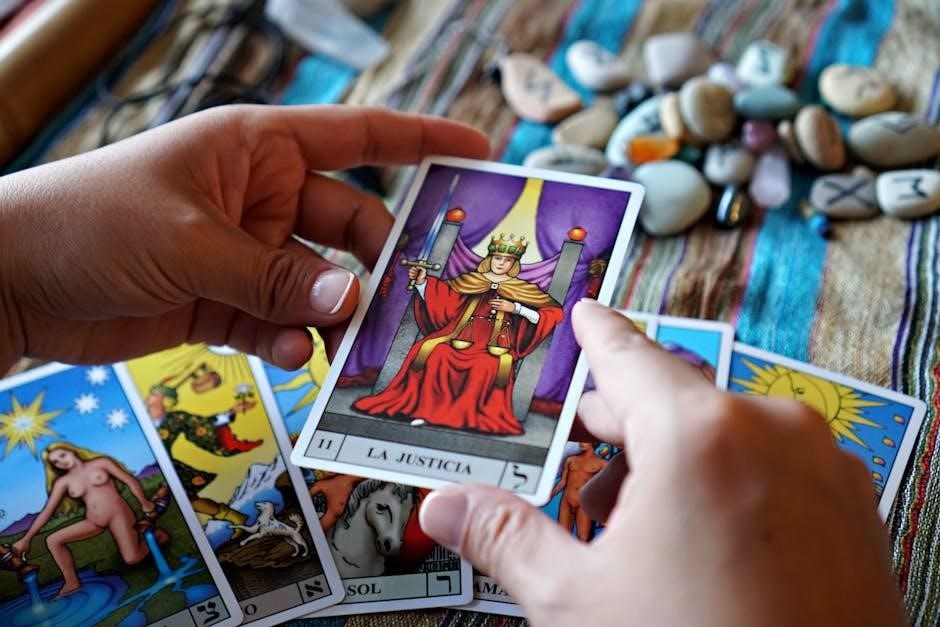
Consisting of ten cards, the spread maps out various aspects: the present, immediate challenge, subconscious influences, past events, potential future, external influences, your role, hopes/fears, and the ultimate outcome. Each position offers a unique perspective, creating a holistic picture.
Holistic Tarot by Avalon Cameron likely provides detailed interpretations for each position within the Celtic Cross. Mastering this spread demands patience and practice, but unlocks a deeper understanding of the interconnectedness of energies. It’s a powerful tool for in-depth self-reflection and guidance, revealing hidden patterns and potential pathways.
Learning Resources & Recommended Books
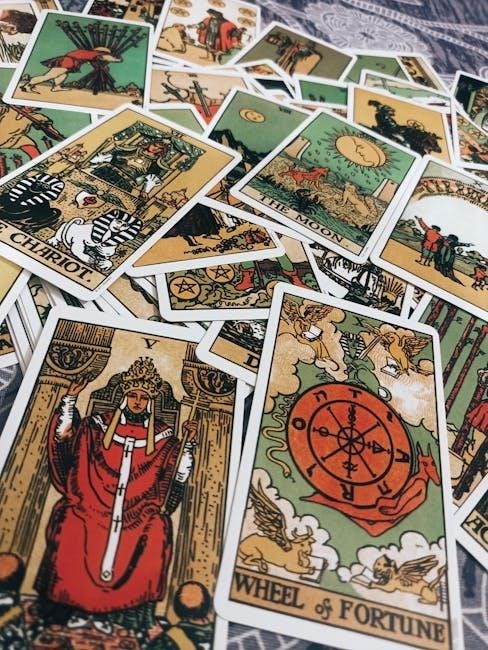
Tarot guide books are essential for study! Holistic Tarot, The Complete Book of Tarot, Learning the Tarot, and The Ultimate Guide to Tarot offer comprehensive knowledge.
Holistic Tarot by Avalon Cameron
Avalon Cameron’s Holistic Tarot stands out as a premier resource for both novice and seasoned tarot enthusiasts. It’s frequently recommended not as a simple “how-to” guide, but as an ultimate reference book for all things tarot. This distinction is crucial; it’s a deep dive, not just a surface-level introduction.
The book is meticulously packed with a wealth of solid tarot information, going far beyond basic card meanings. Expect detailed reference material, insightful keywords, and comprehensive card explanations that truly unlock the nuances of each archetype. Cameron’s approach emphasizes a holistic understanding, connecting the cards to spirit work, intuitive development, and practical life application.
Beyond the core card interpretations, Holistic Tarot provides valuable insights into tarot spreads, reading techniques, and ethical considerations. It’s a book you’ll return to repeatedly as your tarot journey evolves, continually discovering new layers of meaning and wisdom within its pages. It’s a cornerstone for serious tarot students.
The Complete Book of Tarot by Juliet Sharman-Burke
Juliet Sharman-Burke’s The Complete Book of Tarot offers a comprehensive, step-by-step approach to learning the art of tarot reading. This guidebook is designed to take you from a complete beginner to a confident reader, systematically building your understanding of the cards and their intricate symbolism.
The book excels in its clear and accessible explanations, breaking down complex concepts into manageable pieces. Sharman-Burke doesn’t just present card meanings; she explores the historical context, mythological associations, and psychological underpinnings of each card, fostering a deeper connection with the deck.
Readers will find detailed guidance on various tarot spreads, techniques for developing intuition, and practical advice for interpreting readings. It’s a well-structured resource that emphasizes both the traditional and modern aspects of tarot, making it a valuable addition to any tarot library. It’s a solid foundation for a lifelong study.
Learning the Tarot by Joan Bunning
Joan Bunning’s Learning the Tarot is widely recognized as an excellent resource, particularly for those new to the world of tarot. This book distinguishes itself through its focus on building a strong foundational understanding of each card’s symbolism and meaning, presented in a clear and concise manner.
Bunning’s approach is methodical, guiding readers through the Major and Minor Arcana with detailed explanations and illustrative examples. She emphasizes memorization of keywords and imagery, providing a solid base for intuitive interpretation. The book also includes practical exercises to help readers develop their reading skills.
What sets this guidebook apart is its accessibility; it avoids overly complex or esoteric language, making it ideal for beginners. It’s a straightforward, no-nonsense guide that prioritizes practical application and building confidence in your tarot abilities. A truly valuable resource for any aspiring reader.
The Ultimate Guide to Tarot by Liz Dean
Liz Dean’s The Ultimate Guide to Tarot positions itself as a comprehensive resource for both beginners and those seeking to expand their tarot knowledge. This volume aims to demystify the tarot, offering a detailed exploration of the cards, spreads, and the underlying principles of tarot reading.
Dean’s guide delves into the history and symbolism of the tarot, providing context for understanding the cards’ meanings. It covers a wide range of spreads, from simple three-card readings to more complex layouts, offering practical guidance on interpretation. The book emphasizes developing intuition alongside learning traditional meanings.
As the title suggests, it strives to be a complete reference, covering various aspects of tarot practice. It’s a valuable addition to any tarot library, offering a structured approach to learning and a wealth of information for seasoned readers.